2 Corinthians 9:6
Author
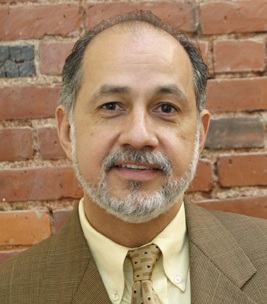
Dr. Roberto Miranda
Summary: Giving to the Lord is not an isolated act, but a way of life tied to our commitment to his kingdom. God’s work should be funded with integrity, without mental or emotional manipulation, and with greater concern for the mission than for a building. Each person should participate according to what they have, after serious reflection and a conscientious decision, without comparisons or shame. We can give according to our means and, when God calls us, stretch in faith beyond our comfort. Our giving should be voluntary, joyful, and tangible—not motivated by pressure, fear of what others may say, or sorrow over what we no longer possess. Sowing generously brings a generous harvest, not as a mechanical way of manipulating God, but as participation in the pattern established in his Word. God promises abundant grace and provision, not to feed selfishness, but so that we may be channels of his gifts and abound in every good work. Therefore, we give with our eyes fixed on him, trusting in his sufficiency and willingly taking every opportunity to support his cause and bless others.
Let us turn to the Word of the Lord. In the 30 minutes or so that we have left, I want to share with you from the Second Letter of the Apostle Paul to the Corinthians. There in verse 6, the Apostle Paul says: “...but this I say: He who sows sparingly will also reap sparingly, and he who sows generously will also reap generously. Each one—everyone say, ‘each one’—should give as he purposed in his heart, not with sadness or out of necessity, because God loves a cheerful giver. And God is able to make all grace abound toward you, so that, always having all sufficiency in all things, you may abound in every good work.”
And now let me read only in Spanish to move the process along. This is the essence of what I have just read, of what I am going to preach. It says, “...as it is written, he distributed, he gave to the poor; his righteousness remains forever. And he who gives seed to the sower and bread to the eater will provide and multiply your seed for sowing and increase the fruits of your righteousness, so that you may be enriched in everything for all generosity, which through us produces thanksgiving to God.” May the Lord bless His Word.
In these last few weeks we have used the preaching time, as you have seen, to establish a biblical foundation for this financial campaign that we are carrying out. In raising money for any cause, we have sought to follow a biblical pattern in doing so. We have sought to honor the Lord and His Spirit, and we have not wanted to use techniques of mental or emotional manipulation. We have also sought to raise your level of faith and your vision. We have not wanted so much to raise money for a building of brick and steel, but rather for the mission that building is to make possible.
Samuel said in a sermon recently that God was not raising up a building so much as a people. And another of the principles we have sought to follow is that, by giving to the Lord for this particular cause, what we are actually doing is entering into a pattern of life. Giving to the Lord is not so much an act as it is a way of life. It is something we do continually as we see how God blesses us when we are generous toward Him and His kingdom. There are people who may say, “But, Pastor, you are talking too much about money.” What we do is establish a project, and then we have tried to concentrate our energies for a time in order to move that project forward. The Lord Jesus Christ spoke about money on many occasions. He was not afraid to use possessions and money as a way of interpreting the degree of people’s commitment to the Kingdom of God. Throughout Scripture we have numerous references to how money and material possessions relate to people’s spirituality.
Recently, as I considered this time of financial campaigning, I mentally reviewed texts that I thought were appropriate, that would be appropriate for different sermons, and I want to tell you that at home I have a list of about thirty texts, each one of which seems to me ideal for a sermon on different aspects of stewardship. But, for your peace of mind, I want you to know that I do not intend to preach 30 sermons on this subject. What did become clear to me, however, is that throughout all of Scripture this theme arises again and again: the way we relate to money and material possessions will determine our relationship with the Lord and with His kingdom. I have drawn comfort from knowing that the Apostle Paul probably outdid me in financial campaigns. The Apostle Paul was not afraid to be very direct when it came to raising funds for his missionary work. And in fact, insofar as possible, whenever we have raised funds over the years, I have wanted the Apostle Paul to be my mentor in terms of the methodology I use to raise funds; and in a time of financial scandals in the Kingdom of God, it is more important than ever that those of us who raise funds for that Kingdom do so with integrity.
Not long ago I learned of a major scandal taking place right now in the United States involving one of the largest evangelistic ministries in the world. There was a very unflattering report about how this ministry handles the funds it receives. I would not dare deny how God has used this ministry to spread the Gospel, but from what we can see, they could have been a little more careful in their use of money and in the image of financial integrity that they have projected to the world. And that is why it is important, not that we stop asking people to give to the Lord’s cause, but rather that we do so in a way that conforms to the principles of the Word of God.
If we turn quickly to Second Corinthians, chapter 9, and even chapter 8, we can review some of those concepts. I do not know whether I will be able to cover everything I want to this morning, but I am sure that what we do touch upon will be a blessing to your life. And you will see that the Apostle Paul employs in his own financial campaign many of the principles we have pointed out during these last few weeks. Chapters 8 and 9 of Second Corinthians take us into one of the Apostle’s financial campaigns. He is raising funds for the saints in an area of great need, and, for example, in verse 3 of chapter 8, speaking about the Macedonians, it says here: “...I testify that they willingly gave according to their ability, and even beyond their ability.”
Here we have a couple of principles concerning how to give to the Lord. The Apostle Paul says, first of all, “They gave willingly.” In other words, brothers and sisters, when we give to the Lord, we must do so with joy. We should give to the Lord because it is a privilege to give to the Lord. And it also says that they gave according to their ability. In other words, the Lord is calling many of us to give according to the financial capacity we have to give. And in this financial campaign, we do not want anyone to feel as though they are being forced into heroic acts. And when you sign or fill out your pledge card, do it in a way that leaves you feeling at peace in your conscience.
But the Apostle Paul also says that they gave beyond their ability. I venture to say that this is the way that most pleases the Lord when we give to Him. We have spoken about giving to the Lord in the zone of discomfort. We have seen how the Lord often calls us to stretch beyond what our reason tells us it is feasible to give to the Lord. And those who understand the principles of faith know that faith often begins where reason begins to tremble. And many times the reasoning of faith will rise far above the reasoning of reason and intellect. And that is why God often asks us to dare to enter that zone of discomfort, as the Macedonians did. These Macedonians also pleaded earnestly that they might be granted the privilege of participating in this service. God grant that, as the years go by, our church may come to be made up of people who are always asking Him, “Lord, give me opportunities to give in order to advance Your kingdom.”
In verse 7 of that same chapter, the Apostle Paul says: “Therefore, as you abound in everything—in faith, speech, knowledge, and in your love—abound in this grace also.” And here we see that we do not give to the Lord only with feelings and words, but with specific actions. It is very easy to say yes to the Lord’s call to love God with all our heart and all our strength. But the Lord has said that the person who loves money cannot love God in the same way, because no one can love two masters. Love, then, means that we must also translate it into acts of love directed specifically toward the Lord.
And there are many other principles here. For example, verse 12 says: “For if there is first a willing mind, it will be accepted according to what one has, not according to what one does not have.” Having a willing mind is very important. For here we see that the Apostle Paul has been preparing the Christians of this region so that, when the time comes to ask for the offering, they will be intellectually and volitionally willing. And that is what we have sought to do throughout these weeks: to prepare you so that, when the time comes to present your offerings, you will know why and how you are doing it. Because giving to the Lord is often not merely a matter of feelings, but also a decision of the will, made with discipline.
Now, in verse 6 of chapter 9, we come to the text that I read a little while ago. The Apostle Paul establishes a principle that we have already heard expressed in many ways. He says: “He who sows sparingly will also reap sparingly, and he who sows generously will also reap generously.” When I read texts like these, the concept of grace versus works immediately comes to mind. We know that salvation is by grace, but do you know that once you have entered the dominion of the kingdom by grace, the degree of growth, productivity, and blessing you attain will depend on the extent to which you exert yourself and invest in the Lord’s Kingdom? That is, once we are already saved, there is a measure of effort and investment that God expects us to make. The blessings we attain in the Kingdom of God, and our spiritual understanding of the Kingdom of God, will depend greatly on our own efforts.
That is why the Lord Jesus Christ says, “Ask, and it will be given to you. Seek, and you will find. Knock, and it will be opened to you.” That is to say, in the Kingdom of God, the response depends greatly on the initial action on our part. And to the extent that we invest our money, time, and energy in the Kingdom of God, so will our spiritual and personal benefit be. This concept of sowing I would call, in modern language, investing. An investor invests an amount because he knows that, through a complex process, that invested amount will multiply and return to him as growth. And likewise we, the children of the kingdom, use what God has given us and invest it, and it blesses both the Kingdom of God and us. It is not that we are trying to manipulate God or establish a mechanical relationship of returns on our investments; it is simply a matter of placing ourselves within a dynamic that God Himself has established in His Word. God says, “If you sow little, you will reap little. If you sow much, you will reap much in My kingdom.” I cannot be more gracious or more generous than God. Some people resent it when we preachers preach in these terms because they believe they have a better theological capacity than the very God who wrote the Bible. They believe they have a better theological capacity than God Himself, and we must see how it is that God calls us to live the Christian life and to give to Him.
Now, in verse 7 there is also a series of principles. It says, “Each one.” That means, brothers and sisters—and you know that one of the principles of this campaign has been that, with the Lord’s help, we may have one hundred percent participation. I believe this applies to all who are members of this church, and I am not referring to visitors or people who do not have a personal relationship with the Lord; let that be understood. But it says here, “Each one,” referring to the fact that, at this time, I want to apply that in the sense that I am calling each one of my brothers and sisters to consider God’s call for his or her life at this time. Perhaps you will not be one of those 200 who will give those 5,000 dollars over two years, as we have asked, or perhaps you will not be one of those who will give more than 5,000 dollars during those two years and perhaps give much more, as some have already pledged; but I know that each one of us can give, without any sense of shame or embarrassment, according to what we feel the Lord has placed in our heart. I beg you, brother or sister, to give in that way, with a clear conscience before the Lord. Do not worry; no one will be judging, saying, “Oh, he gave more,” or, “He gave less.” In the name of the Lord, we reject that spirit right now. But yes, let us not lose sight of this principle of “each one,” because the Lord wants each one of us to carry our share of the Kingdom of God. And I wish we had more time to point this out, but I cannot neglect to mention that studies conducted in congregations everywhere suggest that only 20% of a congregation carries 80% of that congregation’s responsibilities. And I believe the Lord’s goal is for each one of us to carry our proportional share of the responsibility for maintaining the work of God. Why don’t you at least say amen to this just to please me, brothers and sisters? Glory to God. Amen.
Then it says here that each one should give; that is, at some point we must take action. We must take action; in other words, at some point we must move from theory to practice. And then we see here that it says, “as he purposed in his heart.” In other words, I invite you to reflect beforehand: What is the Lord calling me to give?
This idea of deciding in one’s heart suggests a degree of seriousness and intentionality; giving to the Lord is something serious and requires prior reflection. We must be clear about what we are doing. We must not take things lightly, because the things of the Lord are serious. So, as each one has decided in his heart, when you bring your offering, I want you to do so with a sense of reverence and of the seriousness of what you are doing before the Lord. And the Apostle Paul says, “not sorrowfully”; in other words, brothers and sisters, do not give while watching that money leave and grieving: Goodness, what I could have done with that money! In other words, do not picture dollars with little wings flying out of your bank account. You cannot give to the Lord sorrowfully. We must give to the Lord with gladness and joy. Amen, because God loves a cheerful giver.
And it also says, “nor out of necessity.” I would say that the correct translation would be “nor out of obligation,” because I imagine that some people think: Goodness, if they do not see my card among that group of cards, what will the pastor think? And I can picture a deacon or some church leader saying: Well, what choice do I have? If I want to continue in leadership, I am going to have to give to these people. Well, I know that is not true of our deacons; those people are first-rate—forget about it, they are going to give. Amen, deacons, those of you who are here.
Brothers and sisters, let us not give out of obligation. Let us not give under compulsion, in the sense of wondering what people will think if we do not give. Because let me tell you that the Lord reads hearts, and if you are giving in that manner, your offering will not please the Lord, and then you are wasting your money. You need to give to the Lord for His church and, therefore, do so joyfully and with a sense of personal commitment; that is very important. God loves a cheerful giver. When we receive a gift, how wonderful it is when someone gives it to us with a broad smile on their face. How awful it is when people give us a gift and say, “Here, take it. What else could I do?” No, it is important to have that sense of giving from the heart and soul as well.
And there is a wonderful promise here in this passage that we must not lose sight of. It says, “God is able to make all grace abound toward you.” I have discovered that, in the Scriptures, almost every time the Lord calls us to give to Him generously, He also adds a word of promise. Because the Lord is good and merciful, and He says: My son, My daughter, do not worry, for I am able to restore to you what you have given Me. And remember, we have always said in these recent sermons that whenever we give to the Lord for any cause, we should give from a perspective of sufficiency, not from a perspective of uncertainty or fear, because we see that God always says: Do not worry; you will lack nothing, because I am your shepherd.
And here, after his sober warning about how we should give to the Lord, the Apostle Paul rubs a little oil on our backs, where he has just lovingly given us a whipping. And he says: Remember that God has enough power to give you grace—that is, provision. And it says here, “all grace”; in other words, God’s power to restore what you give Him is unlimited in every dimension.
And look here at the Apostle’s superabundant language. It says, “so that, always having all sufficiency in all things, you may abound in every good work.” In other words, there is a kind of redundancy here in the Lord’s provision. He gives us all grace, for every situation, always, in all things, all sufficiency, so that we may abound in every good work. God promises: I will always provide for you throughout your life. And do you know why? So that you can always do good throughout your life. Hallelujah! Because the Lord supplies our needs and gives to us so that we may be channels of His grace, so that we may bless others with the knowledge He gives us, with the talents He gives us, with the energy He gives us, with our professions, with our bank accounts and our money. The Lord says: I will make sure that you always have everything you need so that you can give to others.
In other words, brothers and sisters, the Lord tells us: Give. The Lord says to you and to me: Give to Me, and do not be afraid. Do not give while thinking about what you will lack, and do not give while worrying about what people will say if you do not give. Do not give sorrowfully, thinking about what you have lost; instead, give while looking to Me. I promise you that I am able to give you more than you give Me. May that be our attitude this morning and whenever we give to the Lord’s cause. Amen. Blessed be the Lord.
Let us stand, brothers and sisters. We are bringing our meeting to a close. Let us take a moment to internalize what we have just received—that part which you understand is from the Lord. Ask the Holy Spirit to inscribe it within you, and ask the Lord to integrate all of it into every part of your being. May we be cheerful givers. May we adopt that mindset; it is a wonderful way of life. Whenever there is an opportunity to contribute to the Lord’s cause, may God find in you and me willing participants, participants who are ready and eager. Brothers and sisters, may we dwell in the realm of the Spirit and not so much in the realm of material things, money, and finances, because those who are of the Spirit think first about the things of the Spirit. So this morning I receive the word of the Lord—the part intended for me. And you, too, receive that same word as the word of the Lord. Thank You, Lord. Help us to be committed people. Help us to understand well the principles that govern Your kingdom and even the entire universe, because Your word is faithful and true, and You support those who support Your kingdom. Thank You, Lord; we participate in Your system and give as You prescribe in Your word. Thank You, God. Thank You, Lord. Give the word of the Lord a round of applause. May the Lord bless you.