But Now My Eyes See You
If my people, who are called by my name, shall humble themselves, and pray, and seek my face, and turn from their wicked ways; then will I hear from heaven, and will forgive their sin, and will heal their land. — 2 Chronicles 7:14
Jesus Christ whom not having known you love; in whom, though now you don't see him, yet believing, you rejoice greatly with joy unspeakable and full of glory. — 1 Peter 1:8
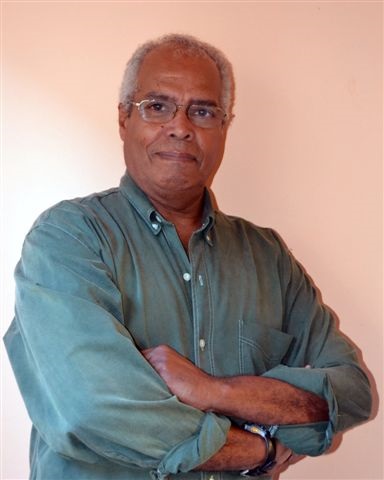
Author
Faustino de Jesús Zamora Vargas
Summary: Popular religiosity may speak of God and preserve Christian customs without knowing the Bible or truly beholding Christ. In Cuba, this superficial faith was followed by an atheism that sought to exclude and replace God; nevertheless, God never abandoned the island and today strengthens his people there. We too can remain content with only what we have heard about him. We need to repent, draw near by grace, and learn to recognize his presence through faith. Although we may stumble along the way, those who love and believe in God can see him at work. Let us pray for Cuba and for the nations that have lost the ability to see Christ.
Many of us were raised in religious environments in our homes. In Cuba, people speak of popular religiosity. It is a concoction of religions in which traditions brought from Africa and the spiritism that came from France through Allan Kardec blend with the Roman Apostolic creed, becoming even more complicated with the introduction of sects and secret societies—also African and European legacies. In my childhood, the alphabet began with the cross of Christ. We children would say, “Christ, A, B, C, D…” and so on until we reached Z. Christ first, and then the letters. As throughout Latin America, the average Cuban was religious. When we visited our grandparents, it was almost obligatory to ask the elders for their blessing before leaving. “Your blessing, Grandma.” “May God bless you.” For a long time, family life was marked by that kind of religiosity, but the Bible was never discussed, and God was understood to be a good man who looked after people, yet He could not be seen anywhere except on altars made by human hands. He appeared at Christmas in the form of a little child, but for the rest of the year He disappeared. Does any of this coincide with reality and everyday life in your country or in another country you know? That is how I remember it, and this is very personal.
Then the winds of atheism reached my homeland, and things turned ugly. Believing in God was an affront to materialism and its gods (Marx, Engels, Lenin). If you said you believed in anything outside that framework, you were condemned to a miserable life; you became a social outcast. A kind of battle cry burst into the lives of Cubans, like a warning to everyone: “Religion is the opium of the people,” signed by one Vladimir Ilyich Lenin, a Russian leader who appeared in textbooks like a god, embracing workers and children with a tender and compassionate gaze.
As in much of today’s world, God was removed from schools and from human life, and in those years Christ was presented to us as an unreal and mystical storybook hero with a happy ending. Man enacted laws and resolutions to supplant the Law of God, but it was all in vain. At least in Cuba, we Christians say today: God never left this land. Today, Christianity—the Christianity of the lordship of Christ alone, with no companions, and no other kind—is growing stronger every day, and the growth God has brought about is remarkable. The country’s own authorities estimate that slightly more than 10% of Cubans are faithful, organized Christians, which means that there are more than one million of us on a small Caribbean island with barely 11 million inhabitants.
God has glorified Himself through man’s attempt to deny or replace Him. These days, a census is being conducted in my country. In the past—in previous censuses in Cuba—each respondent had to answer a question on the required forms: “Do you have (or practice) any religious belief? Which one?” Today, that question no longer seems very important, because if it were asked, there might be many surprises.
There are still many societies that pride themselves on being Christian, but they have remained with only what they have heard about God and have lost sight of the Almighty. Hopefully, it is a temporary affliction, as it was in Cuba. I was one of those who knew of God only by hearsay but had not seen Him until He took notice of me just ten years ago. I was in such great need! I climbed the sycamore tree of grace to see Him pass by (how many times He passed beside me and I hid so that He would not see me!), and the miracle happened.
On October 10, we Christians in Cuba celebrated the National Day of Prayer for the Spiritual Salvation of Cuba. I invite you to remember us in your prayers. I, too, will be praying for the nations that have lost their eyes to see Christ, or for those that have never had eyes to see Him walking along the boundary of their destinies. May they one day be able to say, as Job did: “I had heard of You by the hearing of the ear, but now my eyes see You. Therefore I retract what I said and repent in dust and ashes.” (Job 42:5–6). I did so, and since then, despite the stumbles in my walk with Christ, my eyes have “seen Him” more than once. For those who believe in God and love Him by faith, His presence becomes visible.
May He bless you!